
Our news
When does an SME need a security manager and why doesn't that person have to be on staff?
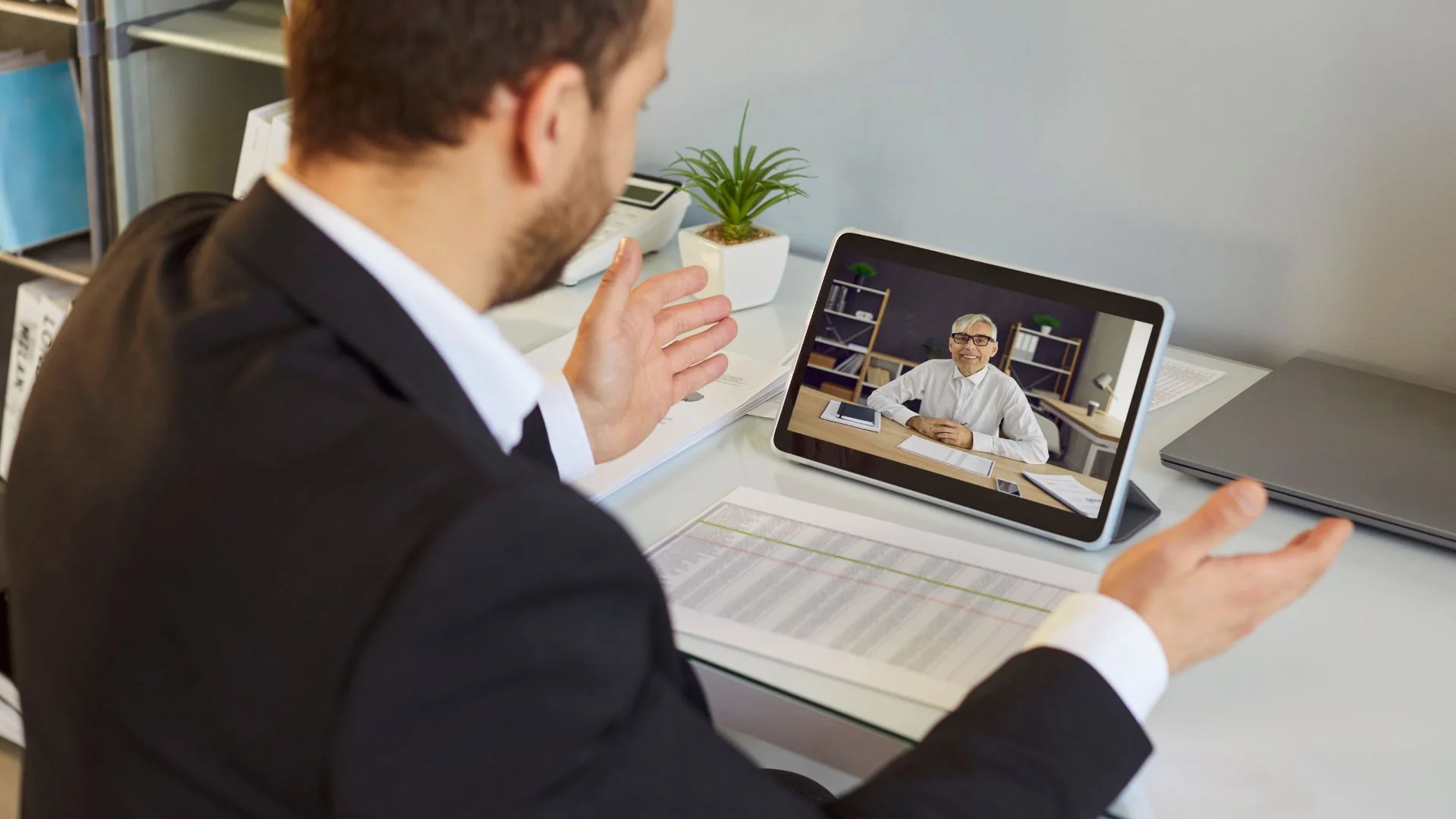
A security officer is the person who decides how a company's information is protected, sets priorities, and is accountable to management when something goes wrong. A small or medium-sized enterprise (SME) needs this role when cybersecurity ceases to be merely a technical issue: when required by its customers, regulations, or insurance company, or when an incident would be costly.
The role is often associated with large corporations, where it's known as CISO. However, more and more SMEs need this position but can't afford an executive's salary. This article explains what the CISO does, when it's needed, and why it shouldn't be part of your permanent staff.
What does a security manager do in an SME?
Their job isn't to install tools, but to decide what needs protecting, with what measures, and in what order. They prepare the security plan, approve policies, monitor vendors with access to your systems, and coordinate incident response. They also keep management informed of any remaining risks.
In a small or medium-sized enterprise (SME), these tasks are often shared among the manager, the IT specialist, and the maintenance provider, with no one truly responsible for them. As a result, security decisions are made late or not at all, and no one can explain to a client or auditor what has been done and why.
When does an SME need a security manager?
It doesn't just depend on the number of employees. There are clear signs that cybersecurity needs someone in charge, even in small companies. If you recognize two or more of these situations in your company, it's advisable to have someone take on that role as soon as possible, even if it's just for a few hours a month.
- Are you affected by a regulation? NIS2, ENS if you work for the Administration, or ISO 27001 if you want to get certified.
- Your customers demand guarantees: security questionnaires, clauses in contracts, or evidence that you protect their data.
- Your insurance company will ask for your measurements: before renewing or taking out a cyber risk policy.
- You have already experienced an incident: ransomware, a phishing email, or a data breach that no one knew how to handle.
- Everything depends on one person: the IT specialist or an external provider who knows the systems, but does not make the decisions.
- The company grows or changes: new headquarters, teleworking, more cloud applications or a new ERP.
The context points in the same direction. According to the INCIBE's balance sheet published in February 2026, In 2025, 122,223 cybersecurity incidents were handled in Spain, 26% more than the previous year. Of these, 25,133 were phishing cases.
What does the legislation say about this figure?
No standard requires all SMEs to hire someone for this position, but several require that someone assume this role. NIS2 holds management responsible for approving and monitoring the measures, and the ENS requires separating the responsibility for security from that of managing the systems.
This separation makes sense: the person who manages the equipment shouldn't also be the one checking if it's properly protected. That's why in many small and medium-sized businesses, the IT person can't simply assume that role. They need someone who can look at the big picture, with their own judgment and the ability to request changes.
Why doesn't he have to be on the payroll?
Because an SME rarely needs someone dedicated full-time, and finding that profile is difficult. The ISC2 study published in December 2025, with more than 16,000 professionals surveyed, indicates that 59% of security teams have critical or significant knowledge gaps.
Therefore, there are three ways to fill the position. Each has its advantages and limitations, as summarized in this table:
| Responsible on staff | Added task for the computer programmer | External Manager | |
|---|---|---|---|
| Cost | Full-time executive salary | Low, but it takes time away from other tasks | Monthly fee based on hours |
| Independence | High | Lower: review your own work | High |
| Experience | It depends on the profile you find. | Limited in governance and regulations | That of a team that works with many companies |
| Continuity | It is lost if the person leaves | It is lost if the person leaves | It doesn't depend on just one person |
For most SMEs, the external option is the most balanced. You gain the expertise of a security manager for the hours you need, and this support can be extended at specific times, such as during an audit or an incident.
How many hours per month does your company need?
It depends on your size, your responsibilities, and your starting point. Typically, you begin with more dedication during the first few months, while the diagnosis is being made and the plan is being prepared. Once the measures are in place, monthly follow-up and a quarterly review with management are sufficient.
A company that must comply with the ENS or NIS2 will need more hours than one that simply wants to answer customer questionnaires. Therefore, it's advisable to start with an assessment to determine the actual time commitment required, rather than committing to a specific number without considering the actual time commitment.
How can Apen help you have a security officer?
At Apen, we assign you an external CISO who integrates seamlessly into your company with a fixed monthly commitment. They prepare the plan, secure policy approval with management, coordinate your team and vendors, and provide you with monthly updates on the security status.
You can see how it works on our service. CISO as a Service. We have been working with SMEs in Vallès and Barcelona for over 35 years. Call us on 938 606 220 or request your free diagnostic, and we'll tell you how many hours you need.
Frequently Asked Questions
What is the difference between a security officer and a CISO?
It's the same function. CISO stands for Chief Information Security Officer, the term used by large companies. In SMEs, the Spanish term is usually used.
Can the company's IT specialist be responsible for security?
It can be very helpful, but it's not ideal. The ENS requires separating those who manage the systems from those who ensure their security, and the IT professional would end up reviewing their own work.
Is it the same as the data protection officer?
No. The data protection officer ensures compliance with the GDPR. In contrast, the cybersecurity officer is responsible for protecting systems and information against attacks and incidents.
What profile should it have?
Technical knowledge, but also risk management and regulatory expertise. Must be able to explain risks to management and prioritize within a limited budget.
How much does it cost to have an external one?
It depends on the number of hours per month and the scope of work. It's always a fraction of the cost of a full-time executive. After the free consultation, we'll give you a fixed monthly rate.
Is it possible to start with just a few hours?
Yes. Many SMEs start with a few hours a month for diagnosis and planning, and only increase their time commitment when necessary, for example, in the event of an audit.