Our news
Electronic Administrative Control Document (DeCA): what is it, when will it be mandatory and how does it affect companies?
In October 2026, the road freight transport sector in Spain will face one of the biggest administrative changes in recent years. The traditional paper-based control document will give way to a completely digital model through the Electronic Administrative Control Document (DeCA).
Although many companies still manage this documentation manually, the new regulations will require them to generate, store, and make these documents available to the authorities in electronic format. This is not just a technological change: it represents a transformation in how shipments, controls, and logistics traceability are managed.
In this article we explain what the DeCA is, who it affects, what changes from October 5, 2026 and how companies can prepare to comply with the regulations.
What you will see in this article
- What is DeCA?
- Why is it implanted?
- Who does it affect?
- When will it become mandatory?
- Which transport services are required to comply?
- How will the inspections work?
- What should companies do?
- Solutions for automating compliance
- Frequently Asked Questions
What is the Electronic Administrative Control Document (DeCA)?
He Electronic Administrative Control Document (DeCA) It is the digital version of the current control document required for certain public road freight transport services in Spain. The regulation does not create a new document, but rather transforms the current system into an exclusively electronic format.
Its purpose is to provide the authorities with essential information about a transport operation and to facilitate inspection and administrative control. To this end, the document must meet a series of technical requirements and be available throughout the entire transport process.
In other words: the control document will continue to exist, but it will no longer be managed on paper.
Why is this obligation being implemented?
The digitization of the control document is part of the modernization process promoted by the Ministry of Transport and Sustainable Mobility and by European initiatives for logistics digitization.
The main objectives are:
- Reduce the use of paper documentation.
- Improve the traceability of shipments.
- Facilitate roadside inspections.
- Guarantee the authenticity and integrity of the information.
- Reduce errors resulting from manual processes.
- Promote integration with companies' computer systems.
For many organizations, this obligation will represent an opportunity to advance the digitization of their logistics processes.
When will the DeCA become mandatory?
The key date is the October 5, 2026.
From that moment on, all administrative control documents required for the affected transport services must be managed electronically. No additional adaptation period is planned after that date.
Therefore, companies that still rely on manual procedures should start reviewing their systems and processes as soon as possible.
Who is affected by this regulation?
One of the most common mistakes is thinking that it only affects carriers.
The reality is that different actors in the logistics chain are involved:
Loading companies
Manufacturers, distributors, and companies that contract the transport of goods are responsible for ensuring that the shipment has the required documentation.
Carriers and fleets
They are the ones who physically carry out the transport and must be able to prove the existence of the document during the service.
Logistics operators
Companies and agencies that coordinate or subcontract transport are also part of the documentation and traceability chain.
Therefore, this obligation can affect both transport companies and industrial, distribution or logistics companies that work with road shipments.
Which transports will need to use the DeCA?
According to information published by the Ministry, the DeCA will be mandatory in:
- Public road freight transport carried out entirely within Spain.
- Cabotage operations carried out in Spanish territory.
Which modes of transport are excluded?
The main exceptions include:
- Certain light parcel delivery services covered by the regulations.
- International transport (where the documents provided for in the corresponding conventions continue to apply).
- Complementary private transport.
How will an inspection with the DeCA work?
Digitization completely changes the way documentation is accredited.
In simplified terms, the process will be:
1. The digital document is generated
The corresponding electronic document must exist before starting the transport.
2. It is stored electronically
The document is stored on a digital platform or repository that guarantees its availability.
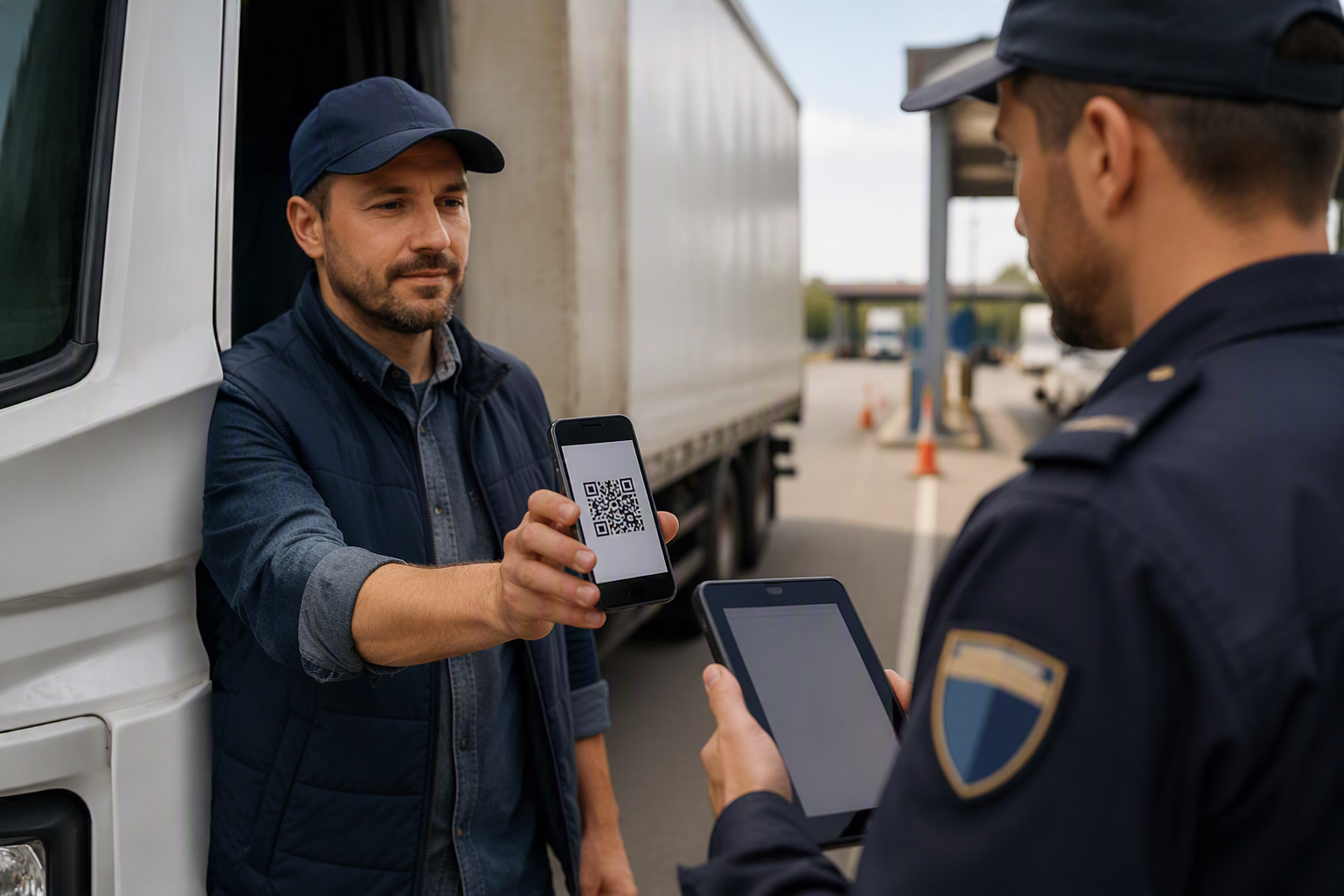
3. The driver can prove its existence
Normally through QR codes or access mechanisms defined by the regulations.
4. The authority verifies the information
During an inspection, agents will be able to access the electronic document to verify the transport data.
What should companies do before October 2026?
Time is running out, so it's best to start as soon as possible.
These are the main recommendations:
Review current processes
Analyze how transport documents are currently generated.
Identify responsibilities
Determine who creates, validates, and safeguards the documentation.
Automate document generation
The higher the volume of shipments, the more important it is to reduce manual intervention.
Ensure traceability
The documents must be kept accessible and secure throughout the entire operating cycle.
Integrate management with the ERP
Integration avoids duplication, data entry errors, and wasted time.
How to automate compliance from a3ERP or other systems in your company?
To facilitate adaptation to this new obligation, APEN has developed A-DECATRANS, a solution designed to automate the management of the Electronic Administrative Control Document.
Among its features, the following stand out:
- Automatic generation of the document from the delivery note.
- Document custody on SaaS platform.
- QR code generation for inspections.
- Integration with a3ERP.
- Connectivity with other systems via REST API.
In this way, companies can prepare for the entry into force of the regulations without completely modifying their internal processes.
Conclusion
The arrival of DeCA represents a decisive step towards the digitalization of road freight transport in Spain.
Although the obligation will not fully come into effect until October 5, 2026, Companies that begin reviewing their procedures now will have a much simpler and safer transition.
For many organizations, the key will not only be in complying with regulations, but in taking advantage of this obligation to modernize their operations, improve traceability and reduce administrative costs.
Frequently Asked Questions about DeCA
What does DeCA mean?
DeCA stands for Electronic Administrative Control Document. It is the digital version of the current control document for certain road freight transports.
When will it become mandatory?
Starting October 5, 2026.
Will it still be possible to use paper?
Not for transports subject to this obligation. The process must be carried out electronically.
Does it affect chargers?
Yes. The regulations affect various participants in the logistics chain, including contract shippers.
Does it affect international transport?
No. International transport continues to use the documents provided for in the applicable conventions.
Will it be necessary to carry documentation during an inspection?
Yes, although their accreditation will be digital through the mechanisms established by the regulations.