
Our news
5G! The technology that will make our lives easier.
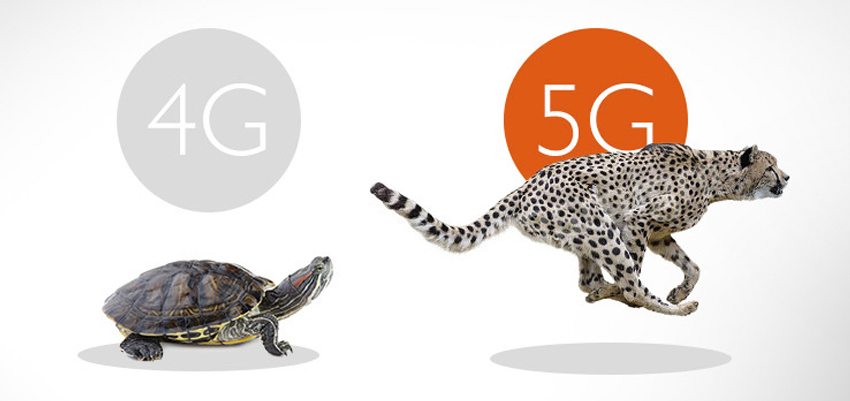
Today, phones, watches, homes, and even cars are increasingly connected to the internet, requiring greater stability and speed. To achieve this stability and prevent bandwidth congestion, a new type of wireless signal is needed… 5G.
He 5G It's a type of wireless connection designed not only for your phone or computer, but also for autonomous cars, virtual reality, or the internet of things.
What is it?
First of all, it must be taken into account that a technology does not yet exist. 5G official. There is still no universal standard that brands have agreed upon regarding what constitutes the 5G or what minimum requirements a network must meet to be considered as such. 5G It is currently a concept under development, and we will not begin to see it in operation until 2020.
Then it will begin to spread gradually until it becomes the standard technology. However, we do know which direction it will take. 5G And in what aspects will it grow the most? Although there will certainly be an increase in upload and download speeds, that won't be the main change offered by the networks. 5G as it was in the jump from 3G to 4G.
The most important aspects that it will introduce 5G They will be in terms of latency and frequency bands.
He 5G It will increase download speeds to up to 10 gigabits per second. It will also significantly reduce latency (thus offering faster loading times). In short, it will provide the network with the connectivity it needs to power hundreds of thousands of connected devices in homes and workplaces.
How does it work?
Normally, when a new wireless transmission technology comes to market, it is assigned a higher frequency, and in the case of 5G, It will probably end up in the band that goes up to 6 GHz. The reason why these new technologies The reason higher frequency bands are used is that these bands are usually not already in use, and they also transmit information at higher speeds. The problem, however, is that signals at higher frequencies don't travel as far as lower ones, so multiple antennas (MIMOs) will be needed, likely used to amplify the signal wherever it is available. 5G.
Transfer speeds faster than fiber. Speeds of up to 5 Gbps are currently being tested using various technologies. 5G (and even higher under ideal conditions). That is, 5,000 Mbps. Considering that current fiber optic networks reach 300 Mbps, you can get an idea of what that means. 5G In terms of speed, it would be roughly like being able to download a full DVD in one second.
Furthermore, it's not just about having super high speed, but also that, in the same place, such as a concert or a sporting event, speeds of tens of Mbps can be available to everyone without reliability problems or interruptions.
With 3G and 4G, this number of users is limited to a few hundred, which means that in places where many people are connected at the same time, mobile connections work erratically and unreliably.
What will it generate?
This new connection will allow us to have autonomous cars thanks to cameras and sensors. High-quality video conferencing, streaming content in virtual reality and downloads at breakneck speeds. In the field of telemedicine, it will enhance the remote surgery operations.
Remember that it's not just about having more speed, but also about having a lower response time (Touch Internet), greater reliability and security, optimal use of energy from connected devices, and proper network management when we have thousands of devices connected at the same time and in the same place.
When will it be ready?
Most experts predict that it will not be fully implemented until 2020, although it is already being tested in some locations in the United States.
If we want a vision of the future where billions of devices remain connected to the network, this new protocol is necessary… the 5G.