
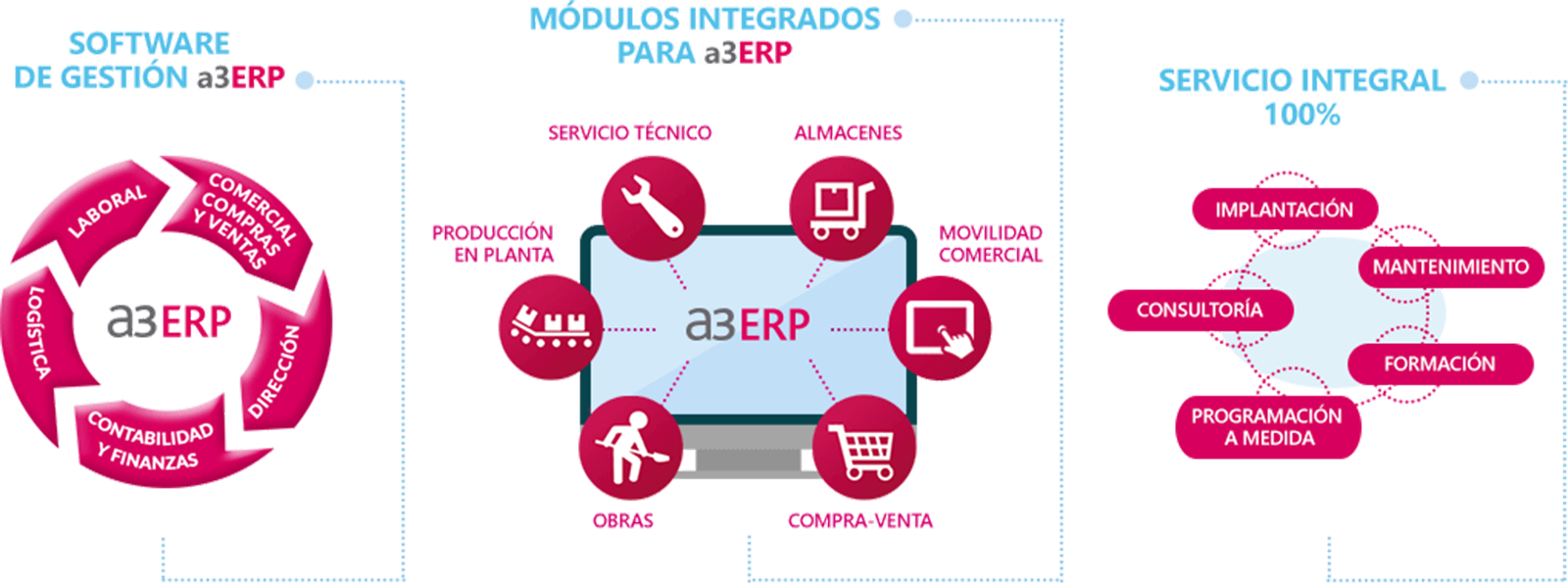
An ERP system is a fundamental tool for enterprise resource planning. This type of software is used by organizations to manage daily business activities, such as accounting, procurement, project management, risk and compliance management, and supply chain operations. A good ERP system also includes business performance management, with the ability to plan, budget, forecast, and report on a company's financial results.
An ERP system integrates a multitude of business processes and enables data flow between them. The system eliminates data duplication, ensuring data integrity and security while taking into account various data sources.
Today, an ERP system is essential for managing businesses of all sizes and across all industries. For these companies, ERP is as indispensable as electricity, maintaining order and ensuring the smooth execution of business activities.
An ERP system is designed around a single, defined data structure, typically based on a common database. This helps ensure that information used across the enterprise is standardized and based on shared definitions and user experiences. These core structures are then interconnected with workflow-driven business processes across all business departments—such as finance, human resources, engineering, marketing, and operations—linking the systems and the people who use them.
We can define an ERP system as the vehicle for integrating people, processes, and technologies within a company. For example, a company that manufactures automobiles acquires parts and components from various suppliers. It could use an ERP system to track requisitions and purchases and ensure that each component throughout the entire process uses consistent data connected to the company's workflows, business processes, reports, and analytics. With the ERP system, this company uniformly identifies components by part name, size, material, source, batch number, supplier part number, serial number, cost, and specification.
Since data is the lifeblood of all modern businesses, an ERP system facilitates the collection, organization, analysis, and distribution of this information to all people and systems that need it to better fulfill their role and responsibility and, in addition, create a more efficient company.
Instead of multiple separate databases with an endless inventory of disconnected spreadsheets, an ERP system brings order to the chaos so that all users, from the CEO to accounts payable employees, can create, store, and use the same data derived from common processes.