
WHAT IS A RAID?
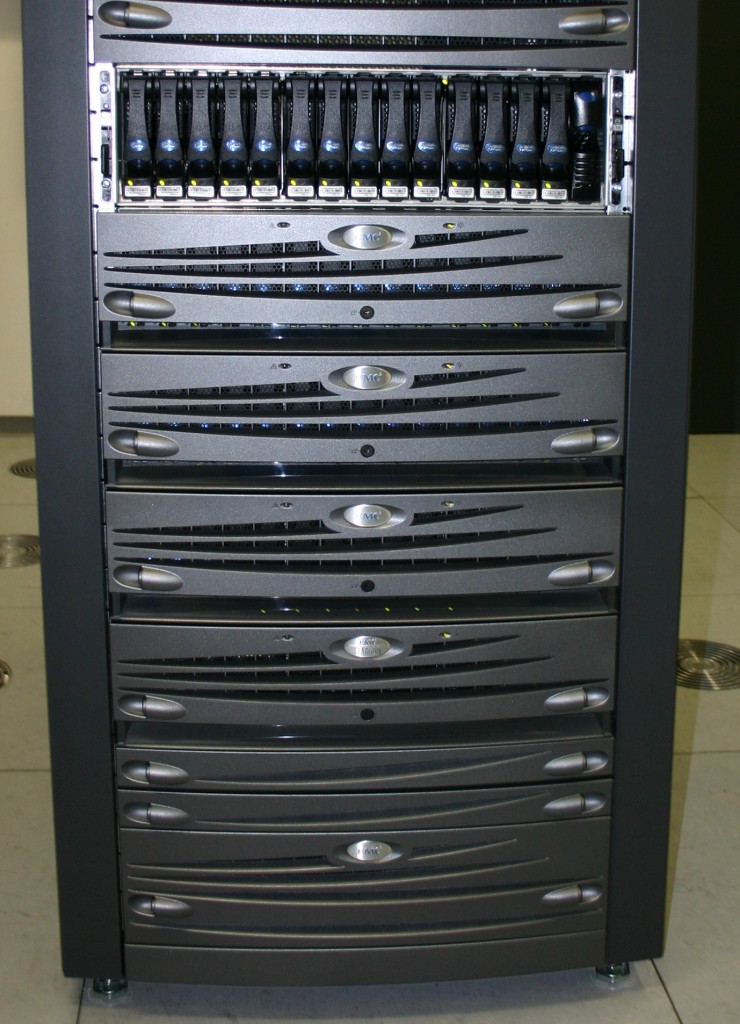
RAID stands for Redundant Array of Inexpensive Disks and is a widely used technology.
RAID is the way in which multiple drives are logically arranged together into a single array. The idea is that these drives working together provide the speed and reliability of a single, more expensive drive. While RAID is an excellent solution, the exact speed and reliability you'll get depends on the specific type of RAID you're using.
Spinning disks, mechanical hard drives, or hard disk drives (HDDs) are typically chosen in situations where needs like speed and performance are secondary to cost. Due to physical limitations and the mechanical nature of many moving parts, HDDs have a relatively high failure rate. RAID configurations are designed to help alleviate these problems.
There are different types of RAID, for example, RAID 0, which takes any number of disks and combines them into a single large volume. This significantly increases speed, as it reads from and writes to multiple disks simultaneously. However, the disadvantage of RAID 0 is that it is not redundant. The failure of any single disk will result in total data loss. Therefore, this type of RAID is much less reliable. RAID 0 can be used for caching or other purposes where speed is critical and data loss is not a concern.
On the other hand, we have RAID 1, with a much more complex configuration. RAID 1 uses a pair of identical disks that duplicate or copy data equally across all drives in the array. This means that if one drive fails completely, you can continue operating with the remaining drive. In the event of a drive failure, you can replace the broken drive with little to no downtime. It also offers the added benefit of increased read performance, as data can be read from either drive in the array. The downside is that you'll have slightly higher write latency. Since data must be written to both drives in the array, you only have the capacity of one drive available when you need two.
In contrast, RAID 5 requires at least three drives and essentially builds upon the RAID 0 concept by distributing data across multiple drives to increase performance. It also adds redundancy by distributing parity information across the disks. This means a RAID 5 array can lose a disk and still maintain its operations and data. This results in significantly improved read performance, but write performance is highly dependent on the RAID controller used.